

Insights From a Coastal Walk
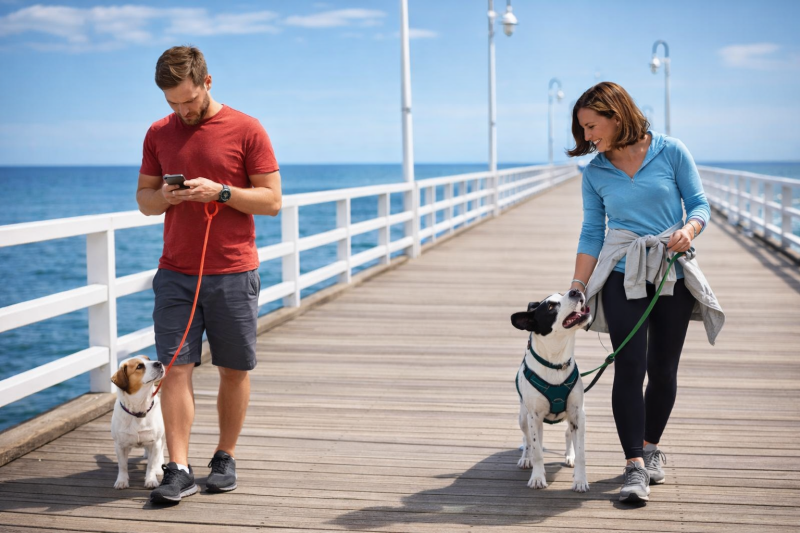
One of the things I notice a lot in my work—walking and caring for different dogs—is how often owners are distracted when they’re out with them. Last week, I was out on the Flyde Coast. I noticed a wide variety of dog owners along the way.
I noticed 80% of dog owners with phones in hand, headphones in, or conversations with friends taking centre stage… while the dog is simply following along, or in some cases just looking for some attention.
It might not seem like a big deal. But from where I stand, it really is.
Because when we’re distracted, dogs lose their advocate. And when you’re responsible for one dog, multiple dogs, or dogs with different temperaments, you become very aware of just how quickly a calm walk can change.
I often compare it to driving a car.
It’s not just about trusting your own ability—it’s about constantly reading what’s around you. Anticipating the unexpected. Spotting the dog off lead in the distance, the cyclist approaching from behind, the jogger about to pass too close.
You can know your own dog inside out—but you can’t always predict everything else.
And here’s the part I think gets missed…
Even if your dog is friendly, well-trained, and used to their environment, another dog might not be.
They might be nervous.
They might need space.
They might be recovering, reactive, or simply having an off day.
One moment of inattention—one dog running over, one missed signal—can completely change the experience for everyone involved.
But beyond safety, there’s something more important being lost.
A walk isn’t just about getting steps in.
It’s where connection happens.
It’s where you notice the small things—how your dog checks in with you, what catches their attention, when they feel unsure or excited.
It’s also a natural training ground.
Eye contact, loose-lead walking, no lead walking, recall—these don’t need a formal session. They build quietly, every time you’re present enough to notice and respond.
And for your dog, this is their time.
Exploring a scent, watching movement, taking in the world—that’s their version of switching off and engaging at the same time. When you’re tuned in, you can guide that, reward it, and share it with them.
I see such a difference in dogs when they’re walked with full attention.
They’re calmer.
More connected.
More responsive.
And interestingly, it benefits us too.
When you leave your phone in your pocket, the walk becomes a reset.
A chance to breathe.
To slow down.
To be present in a way we rarely are the rest of the day.
So next time you head out, just try it.
No multitasking.
No distractions.
Just you and your dog.
Eyes up. Phone away. Heart open.
Because to your dog, that walk isn’t just a routine— it’s time with you. 🐾
Add comment
Comments